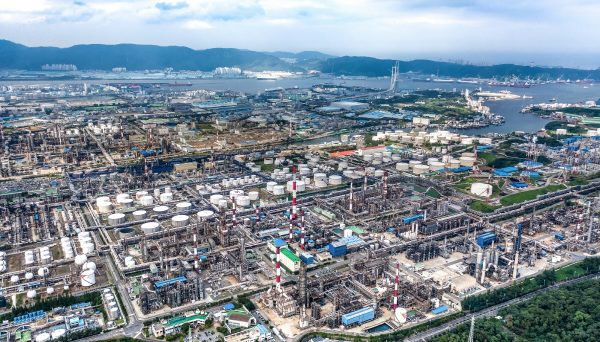
Industrial symbiosis is gaining momentum as companies share waste heat, materials, and by-products to cut costs and emissions. Cases like the Ulsan Eco-Industrial Park show how resource exchange can boost efficiency and support circular industry.
Industrial symbiosis is gaining momentum as industries look for ways to reduce waste, cut costs, and use resources more efficiently. The concept encourages companies to exchange materials, energy, water, or by-products so that one facility’s waste becomes another’s resource. This shift supports both environmental goals and economic resilience.
Across sectors, rising energy costs and increasing pressure to reduce emissions are
pushing companies to rethink traditional linear production systems. Industrial symbiosis offers a practical alternative by fostering cooperation between facilities with complementary needs.
A notable example is the Ulsan Eco-Industrial Park in South Korea. In this large industrial region, chemical, steel, and automotive companies exchange steam, wastewater, lubricants, and various by-products. One project channels waste heat from a chemical plant to nearby factories, while another transforms by-products from the steel industry into valuable inputs for cement production. These exchanges have reduced landfill waste, lowered emissions, and generated millions in annual savings. Ulsan demonstrates how large-scale cooperation can transform heavy industry into a more circular system.
Despite such success, industrial symbiosis is still not widely adopted. Many companies lack detailed knowledge of their material flows or do not realize the value hidden in their unused resources. Some exchanges require new equipment or infrastructure, and without clear regulatory support, businesses may be hesitant to invest. Coordinating multiple partners with different priorities can also be challenging.
Even so, digital tools and resource-matching platforms are making it easier to identify possible synergies. As awareness grows, industrial symbiosis is becoming an essential strategy for building cleaner, more competitive, and more resilient industrial networks worldwide.