Recycling more is not enough: secondary raw materials need reliable buyers and supply chains. Industrial symbiosis can help connect companies and build the skills needed to make these markets work.
Recycling more materials is important, but it does not guarantee that companies will use them. A recovered material can still struggle to find a buyer. For secondary raw materials to become part of industrial supply chains, businesses need materials that meet their requirements and are available in reliable quantities, quality and timing.
Developing a circular market therefore means working on both supply and demand. Material suppliers need to understand what potential users require, while companies considering secondary materials need clear information about their characteristics, availability, cost and performance. This can help reduce uncertainty for both sides.
Industrial symbiosis can bring these needs together. By mapping material supply and demand across a territory or sector, practitioners can identify potential matches between companies. They can also find where smaller flows could be combined to meet a user’s needs, or where shared services and facilities could make recovery more practical.
A potential match is only the starting point. Materials may need to meet technical or regulatory requirements. Transport, storage, sorting or pre-treatment may also be needed. Companies must assess costs, responsibilities and whether supply can continue over time. Some production processes may need to change before a secondary material can be used.
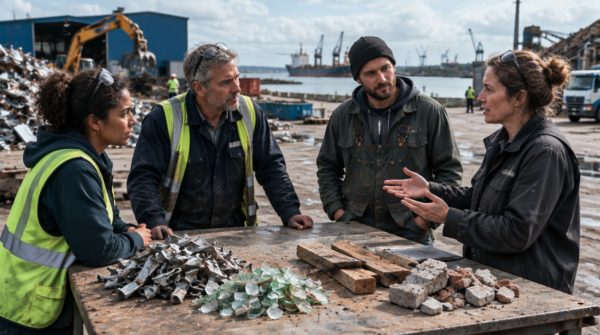
These connections do not happen automatically. Companies need to share information, understand each other’s requirements and build confidence in new supply relationships. A facilitator can bring the right actors together, identify barriers and guide them from an initial opportunity towards a workable project.
This work calls for skills in resource mapping, business and technical analysis, feasibility assessment and collaboration. INSET helps develop these skills through its training for industrial symbiosis practitioners. With the right knowledge and coordination, industrial symbiosis can help turn demand for secondary raw materials into practical business opportunities and stronger circular supply chains.