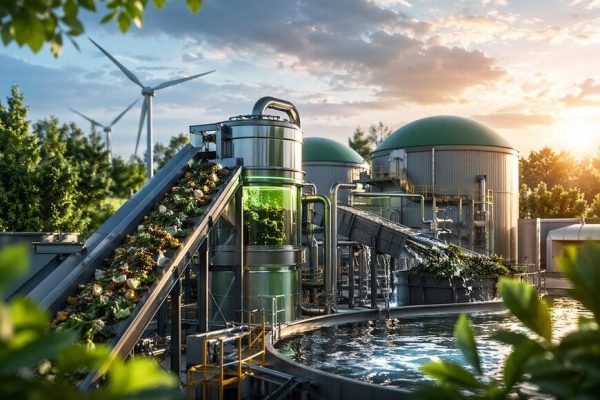
Industrial symbiosis is often associated with the exchange of resources, materials and by-products between companies. But what happens when these collaborations extend beyond factory boundaries and involve entire territories? The European project SOWISE+ offers an interesting example of how urban waste management and industrial production can be connected to create new resource flows, business opportunities and circular value chains.
Rethinking the boundaries of industrial symbiosis
Industrial symbiosis is based on a simple but powerful principle: resources that are no longer needed by one organisation can become valuable inputs for another. Through collaboration, businesses can exchange or share materials, energy, water, infrastructure and expertise, reducing waste while creating economic and environmental benefits. However, the potential of this approach goes beyond exchanges between companies operating within the same industrial area or sector.
Cities, public authorities, waste management operators, research centres and other local stakeholders can also play an important role in identifying and developing new resource flows. Urban areas generate significant quantities of organic waste and other materials that, when properly collected, processed and valorised, can become valuable inputs for industrial production. This broader perspective is increasingly associated with urban-industrial symbiosis, an approach that connects municipal resource management with industrial value chains and creates new opportunities for cooperation between different economic actors.
But how can this work in practice?
From municipal waste to industrial resources: the SOWISE+ example. An interesting example comes from Italy with SOWISE+ (Solid Organic Waste Into Sustainable End-products), a European project exploring how urban waste streams can be transformed into new bio-based materials and reintroduced into productive value chains.
Coordinated by Contarina S.p.A., a waste management operator in the Province of Treviso, SOWISE+ brings together 25 organisations from nine European countries, combining expertise in waste management, biotechnology, material development, research and industrial production. At the centre of the initiative is the development of an innovative multipurpose biorefinery integrating two different urban waste streams: Separately collected urban organic waste, which will be used to produce PHBV (polyhydroxybutyrate-co-hydroxyvalerate), a bio-based and biodegradable polymer.
Post-consumer absorbent hygiene products, such as used nappies and incontinence products, from which high-quality cellulose will be recovered for new industrial applications. The project aims to demonstrate the production of approximately 230 tonnes of PHBV and up to 700 tonnes of recovered cellulose per year. These materials will be further developed and tested for applications in different sectors, including packaging, agriculture, construction, healthcare and 3D printing. What makes SOWISE+ particularly relevant from an industrial symbiosis perspective is not only the technologies involved, but the relationships it seeks to establish. Urban waste management infrastructure becomes part of a wider production system, connecting the collection and treatment of waste with material innovation and industrial manufacturing. Rather than considering municipal waste exclusively as something to be treated or disposed of, the project explores how locally available resources can become the starting point for new industrial value chains.
New connections between cities, waste operators and businesses
The SOWISE+ experience highlights an important aspect of industrial symbiosis: the identification of a potentially useful resource is only the first step. Its successful valorisation requires cooperation between several actors, often belonging to very different sectors. In an urban-industrial model, municipalities and waste management operators can provide access to resource streams, while technology providers and research organisations develop the processes needed to recover and transform them. Manufacturing companies, in turn, can explore how the resulting secondary raw materials can be incorporated into existing production processes or used to develop new products. This creates opportunities for businesses that might not traditionally consider waste management organisations or public authorities as potential partners in their resource strategies. For companies, the possibility of accessing alternative raw materials can help reduce dependence on virgin resources, diversify supply chains and stimulate product and process innovation. For territories, these collaborations can encourage investment in new technologies, strengthen relationships between local stakeholders and support the development of specialised industrial activities. The result is a broader understanding of industrial symbiosis: a network of interconnected organisations in which resources can circulate across traditional sectoral and organisational boundaries.
What does it take to turn a resource into an opportunity?
Despite its potential, urban-industrial symbiosis does not happen automatically. Transforming a waste stream into a valuable industrial input requires more than technological innovation. Several conditions need to be considered:
1. Identifying and mapping available resources
Understanding which materials are generated, in what quantities, where they are available and what characteristics they have is essential. Reliable information about resource flows is the starting point for identifying possible synergies.
2. Matching resources with potential users
A material can only become a valuable resource if there is an organisation able to use it. Identifying potential industrial users and understanding their production requirements is therefore crucial.
3. Assessing technical and economic feasibility
The quality of recovered materials, processing requirements, transport costs, regulatory conditions and market demand all influence whether a potential exchange can become a viable business opportunity.
4. Building effective partnerships
Industrial symbiosis depends on collaboration. Establishing relationships between organisations, defining responsibilities and ensuring continuity in resource exchanges are essential for developing long-term synergies.
The SOWISE+ project addresses several of these dimensions through its work on material development, market validation, sustainability assessment and the replication of its model in other European regions. Its experience also highlights that successful resource valorisation requires a combination of technological, organisational, economic and managerial capabilities.
The role of skills in developing new synergies
As industrial symbiosis expands beyond traditional industrial settings, the skills required to identify and manage resource exchanges become increasingly important. Businesses and professionals need to be able to recognise unused resources, analyse production processes, identify potential partners, assess the feasibility of synergies and manage collaborations across organisational boundaries. These are not exclusively technical skills. They also involve strategic thinking, communication, networking, problem-solving and the ability to understand different business models and production requirements. This is particularly relevant to the objectives of INSET project. Experiences such as SOWISE+ can help broaden this perspective, showing that the opportunities for resource valorisation are not limited to exchanges between manufacturing companies. They can also emerge from connections between businesses, urban services, research organisations and local communities.
Looking beyond individual companies
The development of urban-industrial symbiosis represents an opportunity to rethink how resources are managed and used across entire territories. SOWISE+ illustrates how urban waste streams can become inputs for new industrial processes, provided that the right technologies, partnerships and market conditions are in place. More broadly, it demonstrates that industrial symbiosis is not simply about finding a new use for a by-product. It is about creating connections between organisations, recognising the value of resources and developing collaborative solutions that benefit businesses and territories alike. Going beyond the factory gates means looking at resources differently, building new partnerships and recognising that the next industrial opportunity may come from a resource generated outside the traditional production system. This is one of the key perspectives that can help businesses and professionals explore the full potential of industrial symbiosis.